Harlequin Stitch Crochet: Free Patterns for Beginners
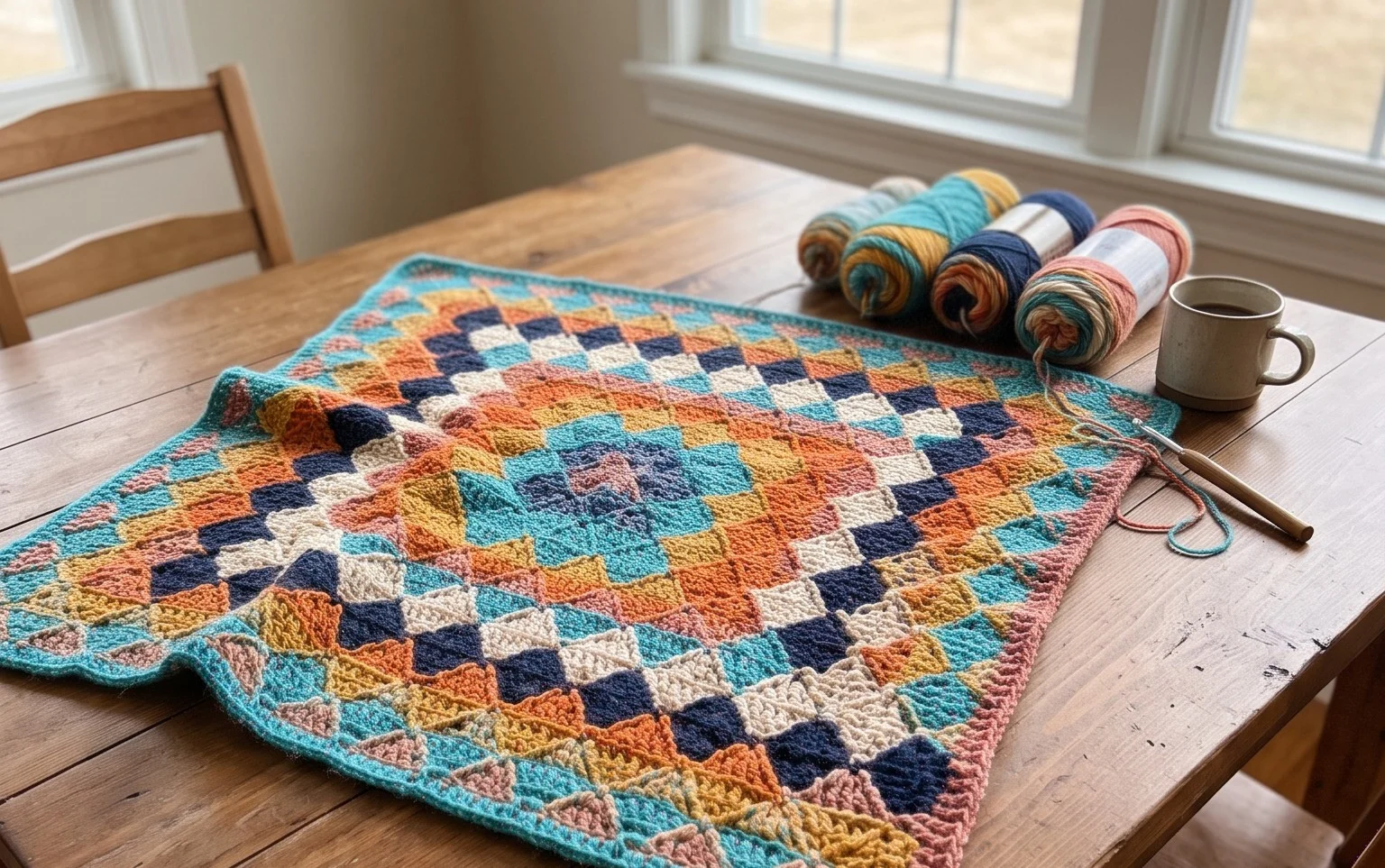
Two contrasting yarn colors bring the harlequin stitch to life, forming a clear diamond pattern with a softly textured surface. Depending on the yarn and hook, the fabric can feel cozy and substantial or light enough for a decorative throw. It suits crocheters who enjoy watching a pattern emerge row by row, including beginners ready to practice color changes and more experienced makers planning a handmade gift or a fresh accent for the home. This guide gathers free pattern ideas and practical resources to help you choose a project that fits your time and yarn stash. You’ll also learn how stitch placement and changing colors create the familiar diamond shapes, plus what to consider when choosing yarn, checking your tension, and keeping the edges tidy. The repeated rhythm makes it satisfying to work, while each new row gives you a clear view of the design taking shape.
Why You’ll Love This Pattern
A firm cotton fabric and simple single crochet stitches make this dishcloth useful at the sink and straightforward to finish. The pattern uses one rectangular piece worked in rows, so you can see how the stitch count stays the same from edge to edge.
- It suits a first crochet project because the pattern uses only chains and single crochet.
- The steady rows are easy to work while watching a show or listening to a podcast.
- One small skein is usually enough, making this a practical project for leftover cotton yarn.
- A finished dishcloth is useful for your own kitchen or as a washable addition to a handmade gift.
The rows were simple to follow, and the cotton made a sturdy cloth that feels good in my hand.
— Maya, home crocheter
Pattern Overview & Skill Level
- Skill Level: Beginner.
- Approximate Time: About 2–3 hours, depending on your pace and how often you stop to count.
- Construction: Work one flat rectangle in single crochet rows, then fasten off and weave in the ends. There is no seaming or separate border.
- Finished Dimensions & Sizing: About 7.5 × 7.5 in (19 × 19 cm) after washing and drying flat, using the gauge below. Cotton can relax slightly when wet.
Gauge is 16 single crochet stitches and 18 rows over 4 in (10 cm). Gauge matters because a tight fabric dries more slowly, while an overly loose fabric can feel floppy. Make a small swatch if you want to check your tension before starting.
Materials & Supplies Needed
- Yarn: About 90 yd (82 m) of worsted-weight cotton yarn, weight #4. A smooth, washable 100% cotton yarn is a good choice. Use one color or combine two colors, allowing enough yardage for the full cloth.
- Hook Size: 4.0 mm / G-6 crochet hook. If your swatch is larger than gauge, try a smaller hook; if it is smaller, try a larger one.
- Notions: Tapestry needle for weaving in ends, scissors, and a ruler or tape measure for checking gauge.
- Substitutions: A cotton-linen or cotton-bamboo yarn in the same weight can work, but may make the fabric drape more or feel less springy. A different yarn weight changes the finished size and absorbency, so check the dimensions and make a gauge swatch before using it.
Stitch Guide & Abbreviations (US Terms)
- ch: Chain. Yarn over and pull through the loop on the hook.
- sc: Single crochet. Insert the hook into the stitch, yarn over and pull up a loop, then yarn over and pull through both loops on the hook.
- st: Stitch.
- sts: Stitches.
Work under both top loops of each stitch unless the instructions say otherwise. The turning chain at the start of each row does not count as a stitch. This keeps the working stitch count at 30.
Step-by-Step Pattern Instructions
Dishcloth
- Foundation: Ch 31. Keep the chain relaxed so the first row does not pull the bottom edge inward.
- Row 1: Sc in the second ch from the hook and in each ch across. (30 sts)
- Row 2: Ch 1 and turn. Sc in each st across. The turning ch does not count. (30 sts)
- Rows 3–34: Repeat Row 2. Work 30 sc in every row, counting at the end of each row. (30 sts per row)
After Row 34, measure the piece. At the stated gauge, it should be close to a square, about 7.5 in (19 cm) on each side. If it is noticeably shorter or longer, you can add or remove rows to bring it closer to square; the finished dimensions will change.
Finishing
- Cut the yarn, leaving a tail about 6 in (15 cm) long. Pull the tail through the loop on the hook to fasten off.
- Thread the tail onto a tapestry needle. Weave it through the backs of several stitches, then change direction and weave through a few more so it stays secure during washing.
- Weave in the starting tail the same way. Smooth the edges with your hands and wash the cloth before first use if you want to remove any yarn residue.
Care & Washing Instructions
- For 100% cotton yarn, machine wash with like colors in warm water, up to 40°C (104°F), unless the yarn label gives a lower limit.
- Dry flat or tumble dry on low if the yarn label permits; reshape the edges while the cloth is damp.
- Lay it flat to block or reshape, aligning the sides into a square; always follow the yarn label for blends or unknown fibers.
Pro Tips & Common Mistakes to Avoid
- Keep your chain stitches a little looser than your single crochet stitches. A tight foundation chain can make the bottom edge narrower than the rest of the cloth.
- Count 30 stitches at the end of each row. If the count drops, you may have missed the final stitch; if it rises, check that you did not crochet into the turning chain.
- Use a stitch marker in the first stitch of a row if you lose track of the edge. Move it up as you work; it is especially helpful when the rows begin to look alike.
- For a wider cloth, add chains to the foundation and work the same number of single crochets across. Each extra foundation chain adds about ¼ in (0.6 cm) at the stated gauge and uses a little more yarn; add rows as needed to keep the piece close to square.
Frequently Asked Questions
Can I use acrylic yarn instead of cotton?
You can, but acrylic is generally less absorbent than cotton and may not suit a cloth used for wiping dishes. Check the yarn label for washing instructions, and make a gauge swatch because the fabric may feel softer or stretchier.
How can I make the dishcloth smaller or larger?
Change the foundation chain to adjust the width, then add or remove rows to adjust the height. Keep the number of single crochet stitches consistent across each row, and expect a larger cloth to use more yarn and take longer to dry.
Is this pattern suitable for a first crochet project?
Yes. It uses chains and single crochet in straight rows, with no shaping or joining. Take care to count the first and last stitches of each row, since those are the easiest places to miss one.
Can I sell dishcloths made from this pattern?
Check the designer’s terms before selling finished items, and follow any credit or small-business conditions they specify. Use your own product photos and describe the yarn and care instructions accurately.
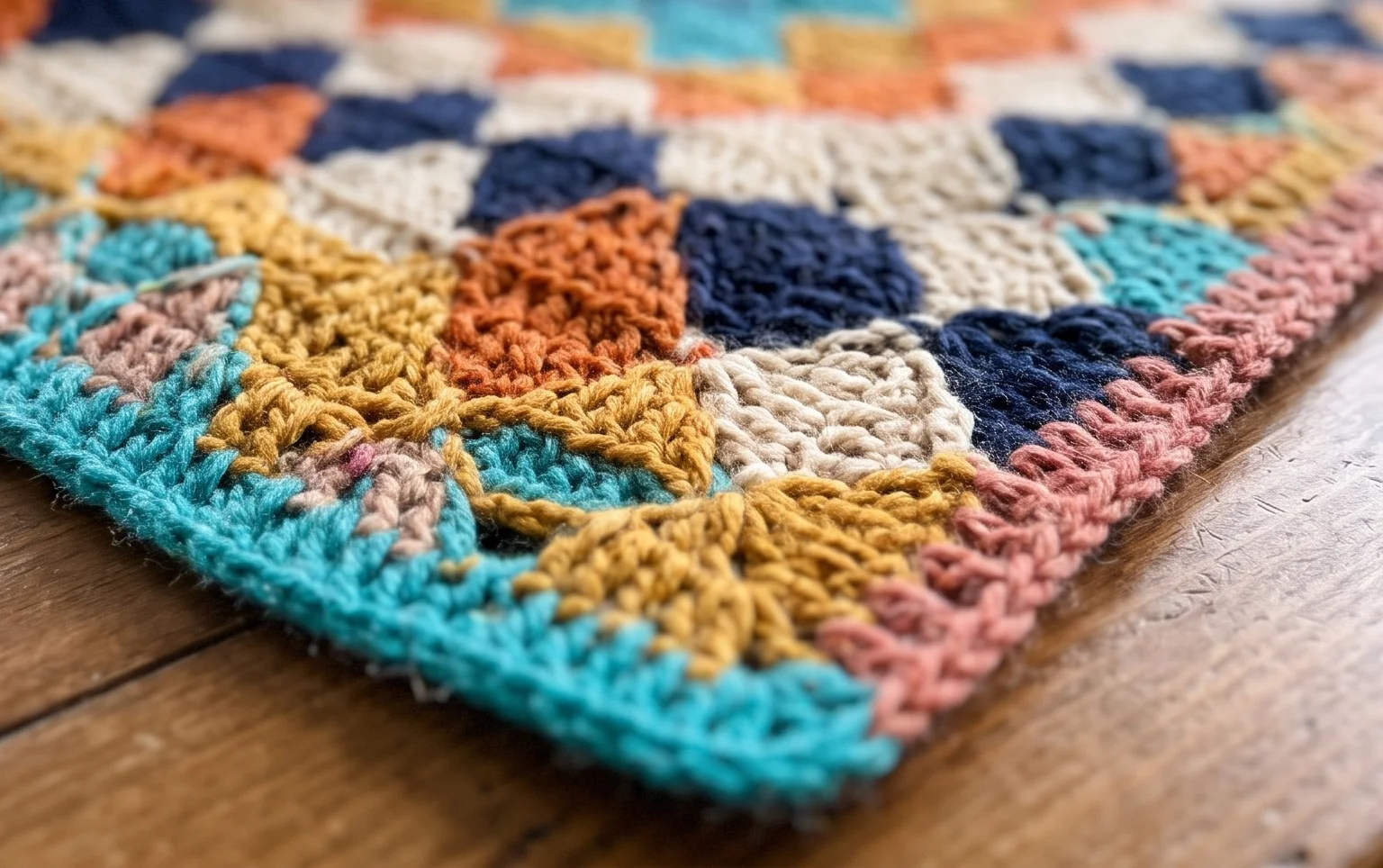
When the final row is finished, those repeating diamonds give your crochet a lively pattern and a satisfying bit of texture. The harlequin stitch can suit a small cushion cover, a warm blanket, or another project from the free patterns and resources in this guide. For a simple variation, keep the same stitch pattern and swap the two main colors for a light-and-dark pair from your stash. Take a photo in natural light so the color changes and stitch detail show clearly, then share it on Pinterest or your favorite social platform. If you enjoyed working this motif, explore more free crochet patterns on the blog for your next weekend project, gift idea, or home update.