Easy Book Rat Free Crochet Pattern with Video Guide
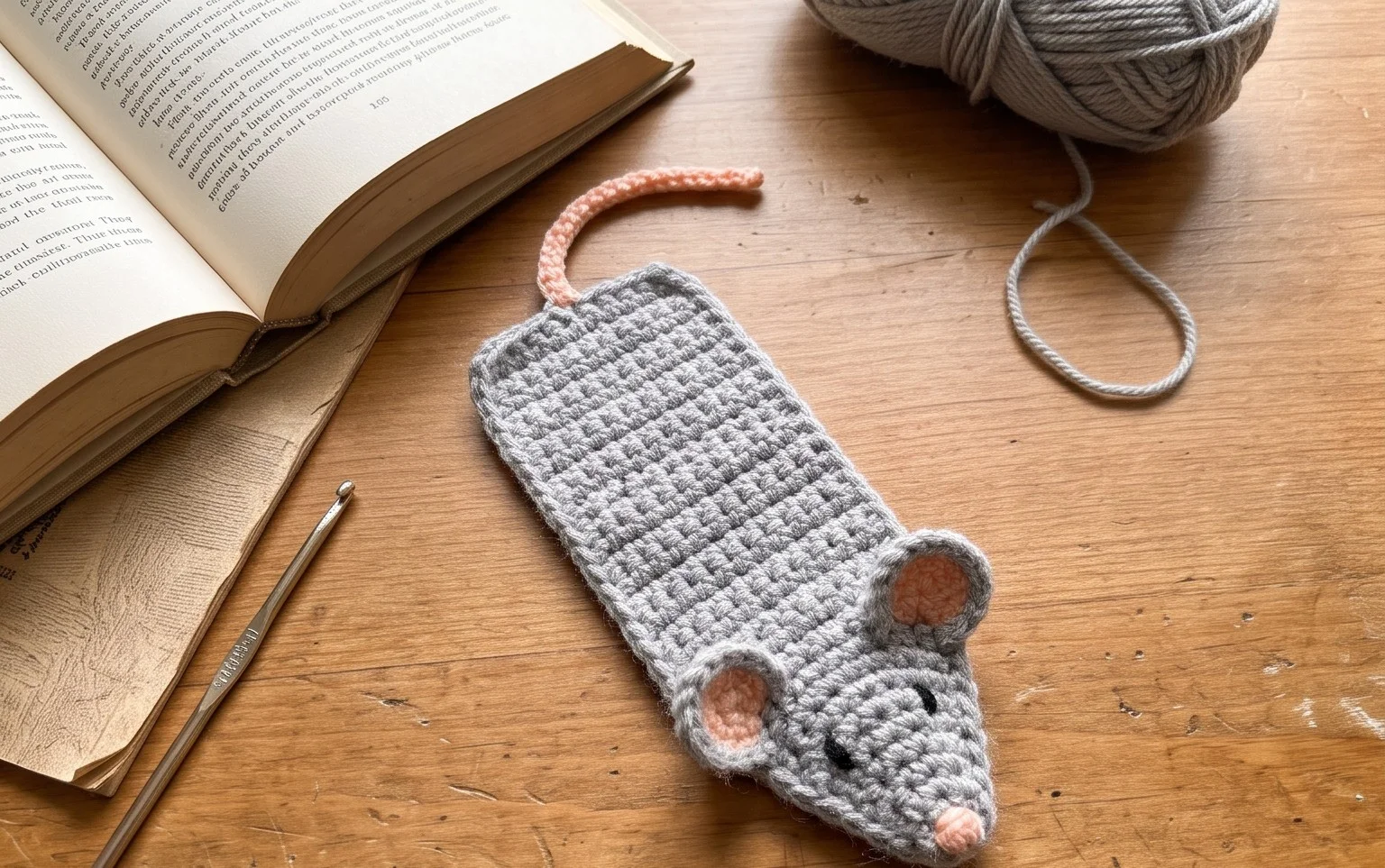
Soft yarn, a rounded little body, and a tiny book give this crocheted rat plenty of personality on a shelf or desk. The finished piece suits readers who like handmade decor, and it makes a thoughtful gift for a book lover, teacher, or fellow crocheter. You can work at a comfortable pace, making the small shapes one at a time before joining them into a character. The pattern is approachable for beginners who know basic crochet stitches, while the video tutorial helps clarify the shaping and assembly as you go. You’ll learn how the pieces come together and how neat finishing gives the rat its tidy, expressive look. It’s a cheerful project to pick up for an evening of making, with a finished keepsake that can sit beside a favorite book.
Why You’ll Love This Pattern
A firm cotton dishcloth is useful at the sink, and its simple rows of single crochet make a tidy, sturdy fabric. This beginner pattern uses one stitch throughout, so you can focus on keeping the edges even rather than learning a complicated repeat.
The cloth takes about an evening to make and uses a small amount of yarn. It is a practical way to use leftover worsted-weight cotton, provided you have enough of one color to keep the fabric consistent. The finished rectangle is easy to fold, wash, and store beside the sink.
A crocheter who has completed the pattern might describe it this way:
The rows were easy to keep track of, and the cotton made a useful cloth with a nice, firm feel.
— Lena, sample crocheter
Pattern Overview & Skill Level
- Skill Level: Beginner. You need to chain, single crochet, and turn your work.
- Approximate Time: 2–3 hours, depending on your pace and how often you stop to count.
- Construction: A flat rectangle worked back and forth in rows, then finished by weaving in both yarn tails.
- Finished Dimensions & Sizing: Approximately 19 × 17 cm (7.5 × 6.7 in), after washing and laying flat to dry. Dimensions can vary with yarn, hook, and personal tension.
- Gauge: 16 single crochet stitches and 18 rows measure about 10 cm (4 in) in the main fabric. Gauge is a guide for estimating the finished size; this small household cloth does not need a precise fit.
Materials & Supplies Needed
- Yarn: About 65–80 yd (60–73 m) of worsted-weight cotton yarn, category 4. Choose a smooth, absorbent 100% cotton in one color. A light or medium shade makes it easier to see each stitch.
- Hook Size: 4.0 mm / G-6 crochet hook. If your fabric feels stiff, try 4.5 mm; if it feels loose and holey, try 3.5 mm. Changing hook size changes the finished dimensions and how much yarn you use.
- Notions: Tapestry needle for weaving in ends, scissors, and a ruler or tape measure for checking gauge.
- Substitutions: A cotton-and-linen blend can make a slightly textured, absorbent cloth. Avoid acrylic if you want a cloth for hot cookware, since acrylic can be damaged by high heat. A thicker yarn or larger hook makes a bigger cloth and uses more yarn; a finer yarn or smaller hook makes a smaller, denser cloth.
Stitch Guide & Abbreviations (US Terms)
- ch: Chain. Yarn over and pull through the loop on the hook.
- sc: Single crochet. Insert the hook into the stitch, yarn over and pull up a loop, then yarn over and pull through both loops on the hook.
- st / sts: Stitch / stitches.
- rep: Repeat.
- tch: Turning chain. In this pattern, ch 1 at the end of a row, turn, and do not count that chain as a stitch.
Work each single crochet under both top loops of the stitch unless instructed otherwise. The turning chain gives you room to turn but does not add a stitch to the row.
Step-by-Step Pattern Instructions
Dishcloth
- Foundation: Ch 31. Keep the chain relaxed so the first row is not tighter than the rest of the cloth.
- Row 1: Sc in the second ch from the hook and in each ch across. Ch 1 and turn. (30 sts)
- Rows 2–5: Sc in each st across. Ch 1 and turn at the end of each row. (30 sts in each row)
- Rows 6–10: Rep Row 2. Keep the same gentle tension, and check that you still have 30 stitches before turning. (30 sts in each row)
- Rows 11–15: Rep Row 2. The sides should remain fairly straight; if they angle inward, check that the first and last stitch of each row are not being skipped. (30 sts in each row)
- Rows 16–20: Rep Row 2. Lay the piece flat and measure its height. It should be close to 11 cm (4.3 in) at this point, though personal gauge affects the measurement. (30 sts in each row)
- Rows 21–25: Rep Row 2. Continue to work into the final stitch at the edge of every row, just before the turning chain. (30 sts in each row)
- Rows 26–30: Rep Row 2. After Row 30, fasten off, leaving a tail about 15 cm (6 in) long. Pull the tail through the last loop to secure it. (30 sts in each row)
Finishing
Thread the yarn tail onto a tapestry needle. Weave it through several stitches on the wrong side, change direction, and weave through a few more stitches so the end is less likely to work loose in the wash. Secure the foundation tail in the same way, then trim the extra yarn close to the fabric without cutting the stitches. Wash and dry the cloth before checking its final measurements.
Care & Washing Instructions
- Wash cotton in warm water, up to 40°C (104°F), with similar colors; use the yarn label’s instructions if they differ.
- Lay flat to dry, smoothing the edges by hand while the cloth is damp.
- If the sides have curled, gently reshape the cloth to a rectangle while damp and let it dry flat.
Pro Tips & Common Mistakes to Avoid
- Keep your loops an even height. Pulling the working yarn tight after every stitch can make the cloth narrow and stiff, especially along the foundation edge.
- Count all 30 stitches before you turn each row. Place a stitch marker in the first stitch if it is easy to miss at the edge; move it up as you work.
- Weave each tail through the wrong side of the fabric in more than one direction. A short pass through just one row can loosen with repeated washing.
- For a wider or longer cloth, add chains for width or work extra rows for length. Each added chain gives roughly one more stitch of width, and extra stitches or rows use more yarn; buy additional cotton before increasing both dimensions.
Frequently Asked Questions
Can I use a different yarn fiber?
Yes. Cotton is a good choice for an absorbent dishcloth and handles regular washing well. A cotton-and-linen blend also works, though it may feel rougher before washing. Check the yarn label and avoid acrylic for uses involving hot cookware.
How can I make the cloth larger or smaller?
For a wider cloth, chain more or fewer stitches, then single crochet into every chain across, keeping an even stitch count for each row. For a longer or shorter cloth, work more or fewer rows. The dimensions and yarn use change with both adjustments.
Is this pattern suitable for a first crochet project?
Yes. It uses a foundation chain and single crochet rows, with no shaping or sewing. Practise a few stitches first, then check the stitch count at the end of Row 1 so you can spot an accidental missed chain early.
May I sell dishcloths made from this pattern?
Check the designer’s terms before selling finished items made from a specific pattern. If you sell your work, describe the fiber accurately and follow any care instructions on the yarn label.
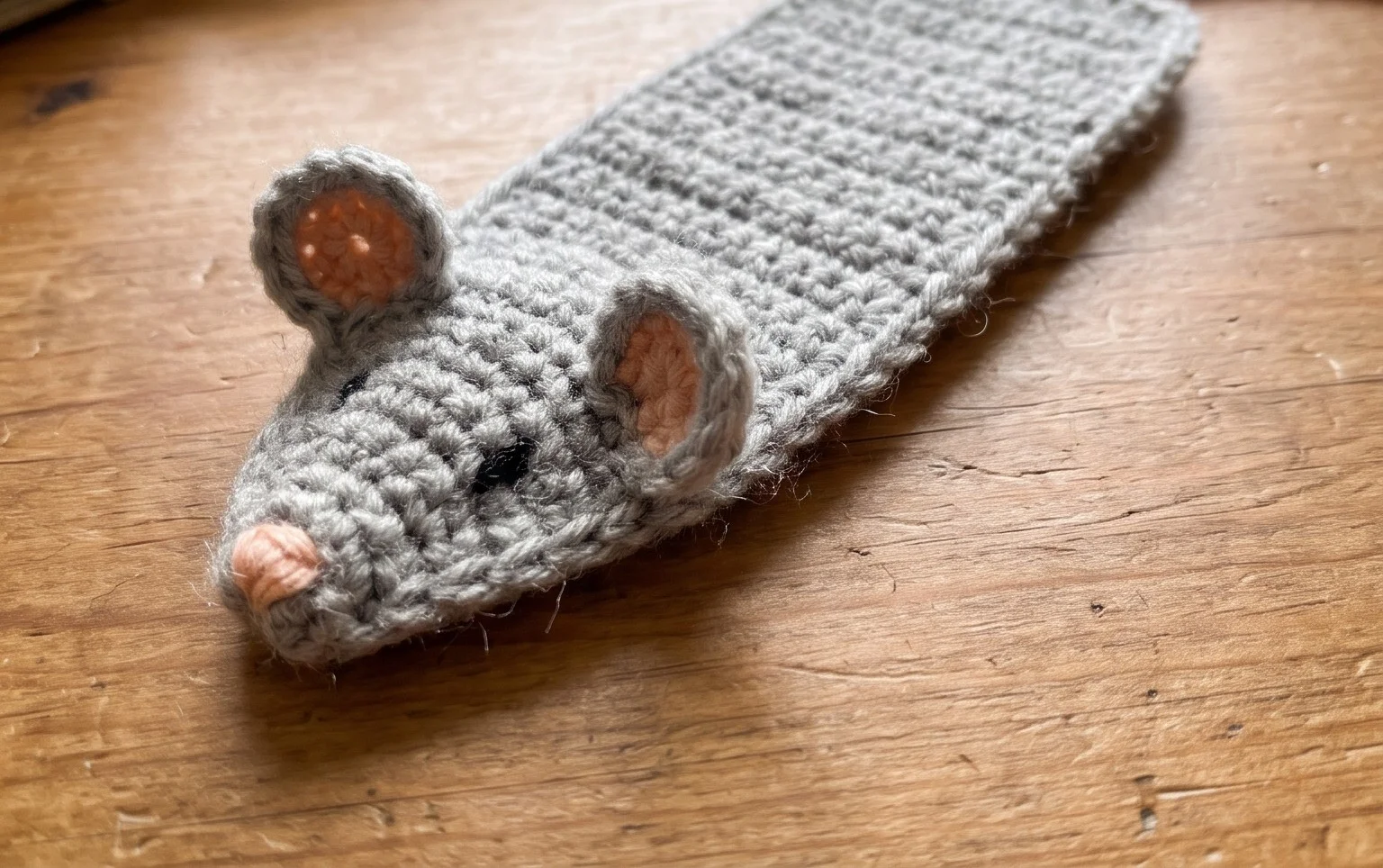
Your little book-loving rat is ready to sit on a shelf, keep a favorite novel company, or brighten a reading nook. For a simple variation, change the yarn colors to match a favorite book cover or the recipient’s room. Take a photo of your finished crochet rat and share it on Pinterest or your social media so other readers can see your version. If you enjoyed making this character, browse the blog for more free crochet patterns, including small gifts and playful projects to work on at home. A few leftover yarn colors can help you give each new one its own look.