8 Easy Christmas Tree Motif Free Crochet Patterns to Make
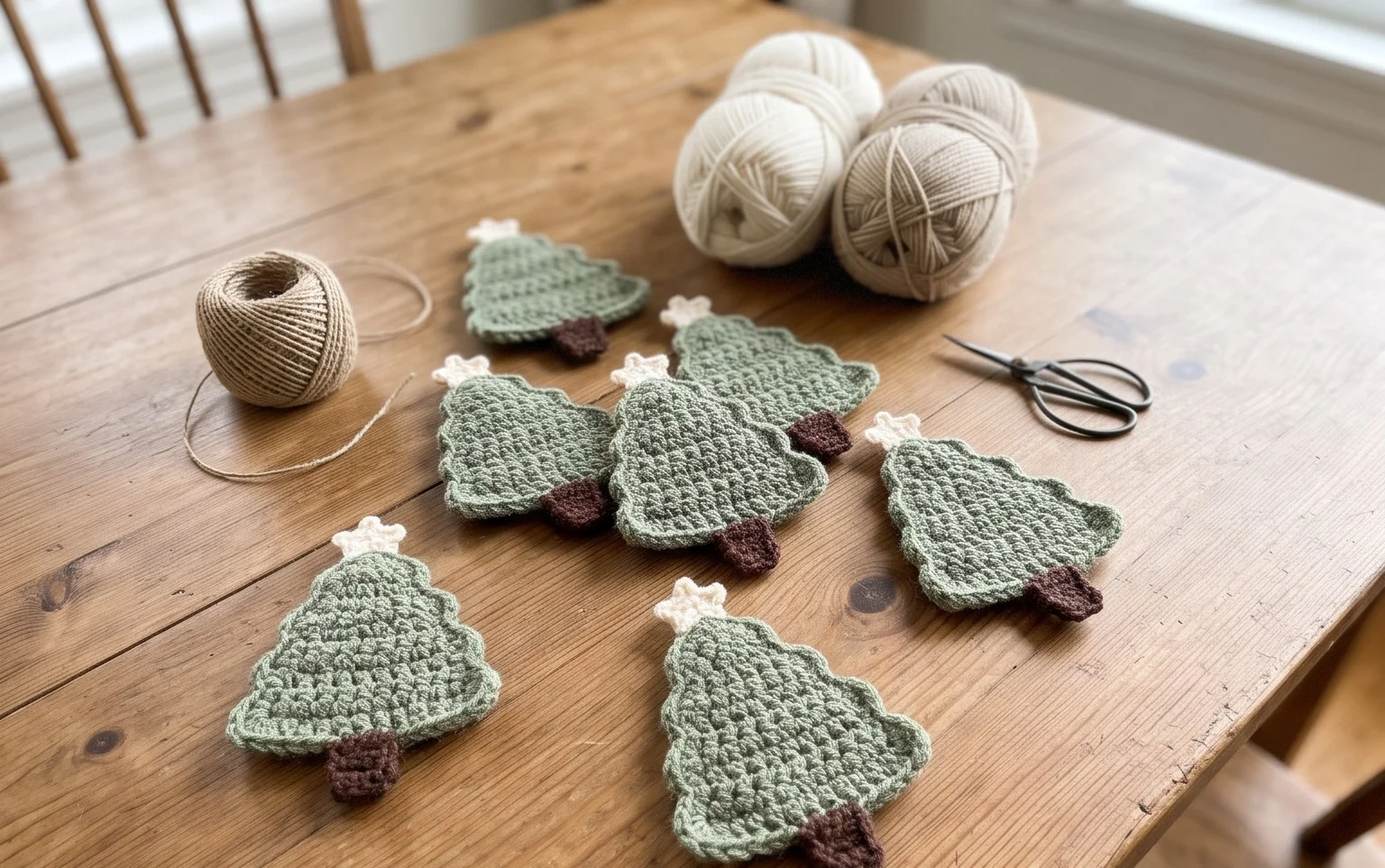
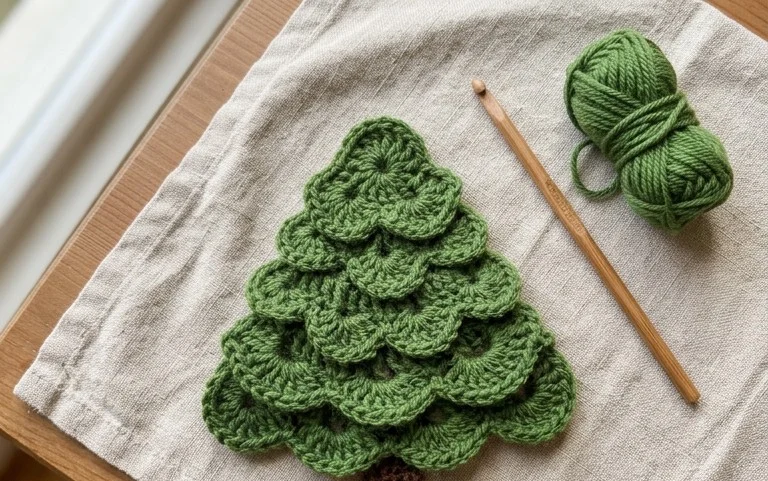
A little green tree motif can bring a handmade touch to a gift tag, holiday garland, or Christmas ornament. These eight crochet pattern ideas offer a range of tree shapes and finishes, from simple flat designs to motifs with raised stitches and decorative details. They suit beginners who are comfortable with basic stitches, and they give experienced crocheters a pleasant way to use leftover yarn between larger projects. As you work, you’ll see how chains and familiar stitches build the tree shape, while yarn choice and small details change the finished look. The motifs are compact, so they’re easy to take along and satisfying to finish in a short crafting session. Use the patterns to add a personal touch to seasonal decorating or make a small batch of handmade gifts.
Why You’ll Love This Pattern
A firm cotton fabric and simple single crochet make this dishcloth useful for everyday washing and quick to finish. The flat rectangle is worked in rows, so there are no increases, decreases, or seams to manage. Its repeated stitches give beginners practice keeping an even edge, while the small size makes it a good project for a quiet evening. One ball of cotton is often enough, and the straightforward shape is easy to keep beside the sink or tuck into a gift basket.
The rows were easy to keep track of, and the finished cloth feels sturdy without being stiff. I made mine during a couple of evenings and use it every day.
— Maya, sample maker
Pattern Overview & Skill Level
- Skill Level: Beginner. You need to know how to chain and make single crochet stitches.
- Approximate Time: 2–3 hours, depending on your pace and how often you stop to check your row count.
- Construction: Work one flat rectangle in rows from the foundation chain. There is no shaping or seaming.
- Finished Dimensions & Sizing: About 7.5 × 6.75 inches (19 × 17 cm), after washing and drying flat. Dimensions may vary with tension and yarn.
The size is intended for a practical hand-sized cloth. For a more reliable fit, make a gauge swatch before starting; cotton can relax a little after its first wash.
Materials & Supplies Needed
- Yarn: About 45–55 yards of worsted-weight (#4) 100% cotton yarn in one color. A smooth, tightly spun cotton is absorbent and holds up well to frequent washing.
- Hook: 5.0 mm / H-8 crochet hook. Change hook size if your gauge is noticeably larger or smaller than the gauge below.
- Notions: Tapestry needle for weaving in the two ends, scissors, ruler or tape measure, and a stitch marker to mark the first stitch of a row if helpful.
- Gauge: 16 single crochet stitches and 18 rows measure 4 inches (10 cm) in the fabric, after lightly washing and drying flat.
- Substitutions: A similar-weight cotton-linen blend can work, though linen may feel firmer and soften with use. A different yarn weight or fiber changes the cloth’s size, drape, and absorbency, and may require a different hook. Avoid fuzzy yarn, which can make the stitch openings hard to see.
Stitch Guide & Abbreviations (US Terms)
- ch: Chain.
- sc: Single crochet; insert the hook into the indicated stitch, yarn over and pull up a loop, then yarn over and pull through both loops on the hook.
- st: Stitch.
- sts: Stitches.
For an even edge, work into the last stitch at the end of each row. The turning chain does not count as a stitch in this pattern.
Step-by-Step Pattern Instructions
Dishcloth
- Foundation: Make 31 ch. Keep the chain relaxed; a tight foundation can pull the lower edge inward. (31 ch)
- Row 1: Sc in the second ch from the hook and in each ch across. (30 sts)
- Rows 2–30: Ch 1 and turn. Sc in each st across, including the final stitch at the edge. Each row has 30 sts. (30 sts per row)
Finishing
After Row 30, cut the yarn, leaving a tail of about 6 inches. Pull the tail through the final loop to secure it. Thread the tail onto a tapestry needle and weave it through several stitches on the back of the cloth, changing direction once so it is less likely to work loose. Weave in the foundation tail the same way, then trim the ends close without cutting the fabric.
Wash and dry the cloth flat before measuring. If your finished rectangle is a little wider or narrower than the stated size, that is normal; use the gauge and fabric feel as your guide. The cloth should lie flat without curling at the sides.
Care & Washing Instructions
- Wash cotton in warm water, up to 40°C (104°F), with similar colors; use a cooler setting if the yarn label recommends it.
- Dry flat or tumble dry on low if the yarn label allows it; reshape the rectangle while damp.
- Block by smoothing the edges and corners flat while damp. Follow the yarn label for any fiber blend or special care instructions.
Pro Tips & Common Mistakes to Avoid
- Keep the chain relaxed: If your foundation edge is much tighter than the rows, use a slightly larger hook just for the chain, then switch to the 5.0 mm hook for Row 1.
- Count the stitches: Check for 30 single crochet stitches at the end of every row. Place a marker in the first stitch if you tend to miss the edge stitch when turning.
- Hide the ends securely: Weave each tail through the back of several stitches, then change direction. A short tail worked through only one row can loosen with repeated washing.
- Adjust the size deliberately: To make the cloth wider, add chains to the foundation, then work one fewer single crochet than the chain count. To make it longer, add rows. Both changes use more yarn; check your remaining ball before extending the project.
Frequently Asked Questions
Can I use a different yarn instead of cotton?
A cotton-linen blend is a suitable option for a dishcloth and may feel firmer at first. Acrylic can be less absorbent, and fuzzy fibers make the fabric harder to clean and inspect. Check the yarn label and make a small swatch because changing fiber or weight can alter the finished size.
How can I make the dishcloth larger or smaller?
Change the foundation chain to adjust the width, keeping one fewer single crochet than the number of chains. Add or remove rows to change the length. A larger cloth takes more yarn, so make sure you have enough before adding several rows.
Is this pattern suitable for a first crochet project?
Yes. It uses only chains and single crochet stitches, and the stitch count stays at 30 after the first row. The main challenge is recognizing the first and last stitch at each edge, so count each row until your edges are consistent.
Can I sell dishcloths made from this pattern?
Check the designer’s terms before selling finished items, since permissions vary. If sales are allowed, describe the yarn and care accurately, and do not claim that the cloth is handmade from a fiber it does not contain.
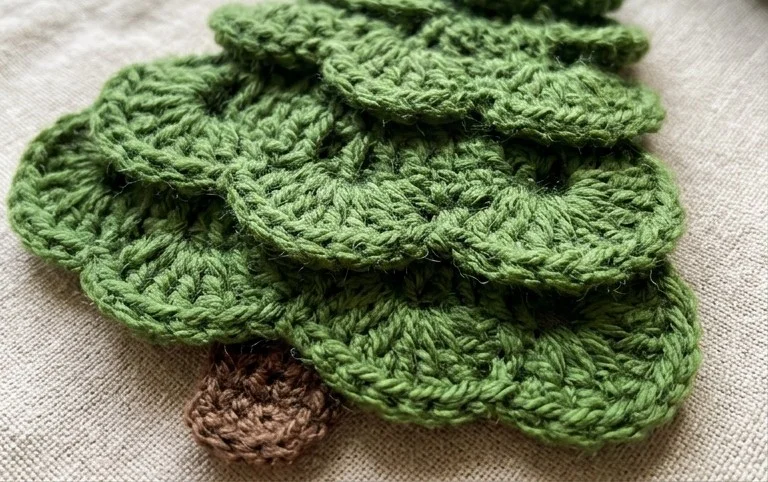
A finished tree motif is a small project with plenty of ways to use it, whether you add it to a card, hang it on the tree, or stitch several into a garland. Try changing the green shade, adding a contrasting trunk, or using a finer yarn for a smaller ornament. When you finish one, share a photo on Pinterest or your favorite social platform so other crocheters can see how your colors and details turned out. Keep the remaining yarn nearby for another motif, and explore more free crochet patterns on the blog when you’re ready for your next seasonal project.