Easy Decorative Flower Crochet Coasters Free Pattern
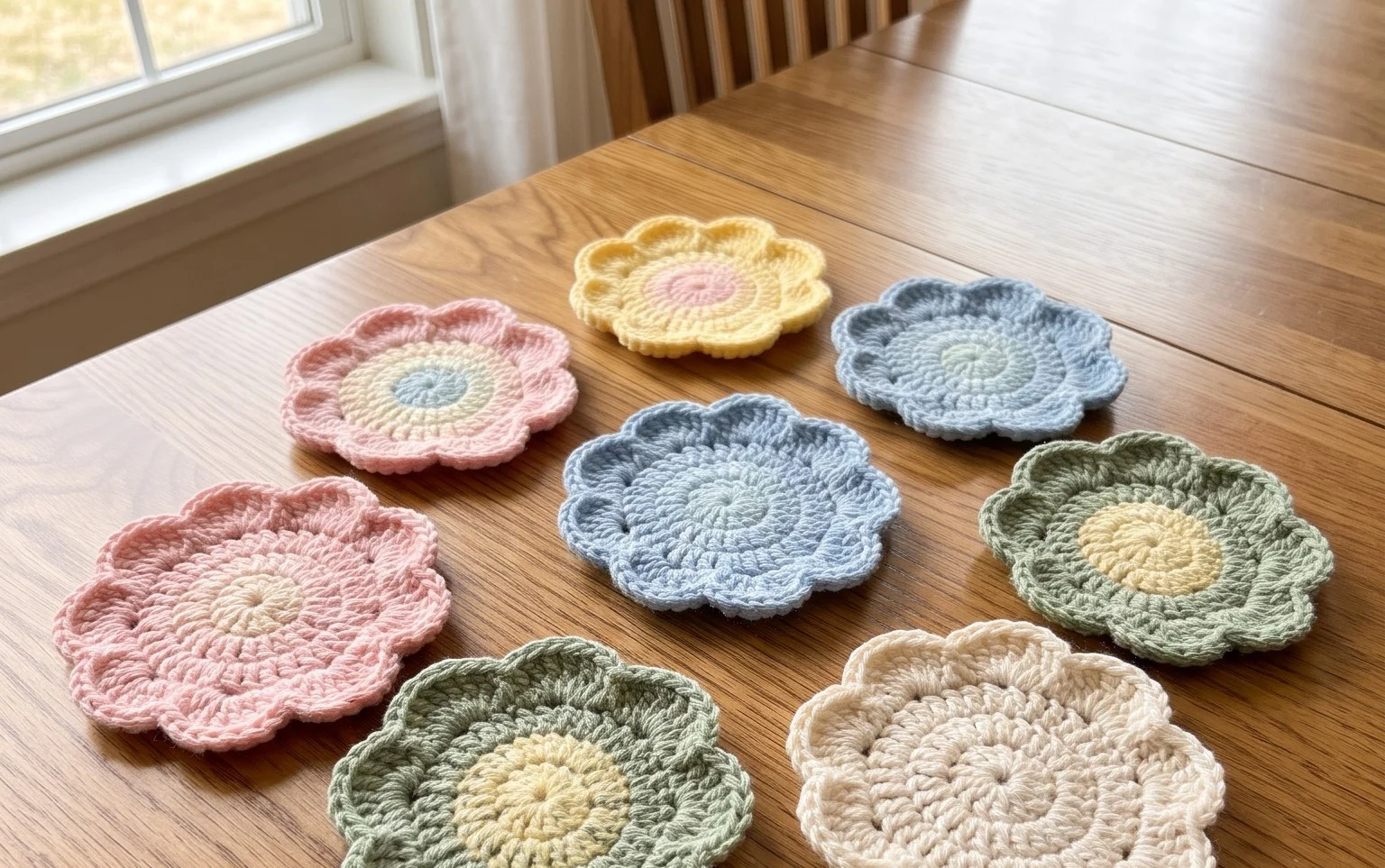
Soft cotton yarn gives these flower-shaped coasters a gently textured surface and a cheerful scalloped edge around your mug. They add a small handmade detail to a coffee table or bedside, and a set in coordinating shades makes a thoughtful gift for a housewarming or birthday. The pattern suits beginners who are comfortable with basic crochet stitches, while experienced makers can enjoy a quick project that uses small amounts of yarn. You’ll learn how stitches worked in rounds form the flower shape, then finish the edges neatly so the coasters lie flat. Choose washable cotton for everyday use, or mix colors to make each bloom different. With a few rounds and simple shaping, you can see the petals take form as you work, making this a satisfying project to pick up between larger makes.
Why You’ll Love This Pattern
A firm cotton dishcloth with even single-crochet rows is useful at the sink and simple to keep clean. This beginner-friendly pattern uses one stitch throughout, so you can focus on even edges and steady tension rather than learning a complicated repeat. It takes about two to three hours, depending on your pace, and uses less than one ball of worsted-weight cotton. Make it in a solid color for a classic cloth or use leftover cotton yarn for stripes, changing colors at the end of a row.
Sample maker feedback: The rows were easy to count, and the cotton made a sturdy cloth that softened after washing.
The simple rows helped me settle into a steady rhythm. I finished it in an afternoon, and it came out just the right size for the kitchen.
— Mara, sample maker
Pattern Overview & Skill Level
- Skill Level: Beginner. You need to chain, single crochet, turn, and weave in ends.
- Approximate Time: Two to three hours, including finishing.
- Construction: Worked flat in rows from the bottom edge upward, then finished by weaving in the two yarn ends. There is no seam or border.
- Finished Dimensions & Sizing: Approximately 7.5 × 7.5 in (19 × 19 cm), based on the gauge below. Small differences in tension can change the finished measurements.
Gauge: 16 single crochet stitches and 18 rows measure 4 in (10 cm) after washing and drying flat. Make a small swatch if you want to check your tension before starting. If your swatch is wider than 4 in, try a smaller hook; if it is narrower, try a larger hook.
Materials & Supplies Needed
- Yarn: About 85–100 yd (78–91 m) of worsted-weight cotton yarn, also called medium weight or #4. Use one color, or prepare a second color for optional stripes.
- Hook: 5.0 mm / US H-8 crochet hook. Adjust the hook if needed to meet gauge.
- Notions: Tapestry needle for weaving in ends, scissors, and a ruler or tape measure for checking gauge. A locking stitch marker is optional for marking the first stitch of a row.
- Substitutions: Choose a smooth, washable cotton or cotton blend of similar thickness. A thinner yarn makes a smaller, lighter cloth; a thicker yarn makes a larger, heavier cloth and may need a larger hook. Acrylic can be used, but it may feel less absorbent than cotton. Check the substitute yarn’s care label before washing.
Stitch Guide & Abbreviations (US Terms)
- ch: Chain.
- sc: Single crochet. Insert the hook in the stitch, yarn over and pull up a loop, yarn over again, and pull through both loops.
- st / sts: Stitch / stitches.
- rep: Repeat.
- sl st: Slip stitch. Insert the hook in the stitch, yarn over, and pull the yarn through both the stitch and the loop on the hook. Used here only if needed to secure a loose yarn end while weaving it in.
The turning chain does not count as a stitch in this pattern. Work the first single crochet into the first stitch of each row, directly below the turning chain.
Step-by-Step Pattern Instructions
Dishcloth
Use a relaxed but even tension. Keep the starting chain loose enough for the first row to fit comfortably. For optional stripes, change colors after finishing a row and before making the next row’s turning chain.
- Foundation: Ch 31.
- Row 1: Sc in the second ch from the hook and in each ch across. Turn. (30 sts)
- Rows 2–34: Ch 1, sc in each st across. Turn. (30 sts each row)
After Row 34, the cloth should measure about 7.5 in (19 cm) wide and close to 7.5 in (19 cm) tall if your gauge matches. If you measure before washing, allow for small changes in the cotton fabric after it is laundered.
Finishing
Cut the yarn, leaving a tail of about 6 in (15 cm), and pull the tail through the final loop to secure it. Thread the tail onto a tapestry needle. Weave it through the backs of several stitches along the edge, then change direction and weave through a few more stitches so it is less likely to work loose. Repeat with the foundation yarn tail. Trim the ends close without cutting into the cloth. Wash and dry the dishcloth before use to remove handling residue and settle the stitches.
Care & Washing Instructions
- For cotton yarn, machine wash on a gentle or regular cycle in cool to warm water, about 30–40°C (86–104°F); follow the yarn label if it gives different instructions.
- Dry flat when possible. If you use a dryer, choose a low-heat setting because cotton can shrink with high heat.
- While damp, smooth the edges and reshape the cloth to its finished measurements. Blocking is optional for this practical item.
Pro Tips & Common Mistakes to Avoid
- Keep the chain even: A tight foundation chain can pull the bottom edge inward. If that happens often, make the chain with a hook one size larger, then switch to the 5.0 mm hook for Row 1.
- Count as you work: Check that each row has 30 stitches, especially the first few rows. Place a marker in the first stitch of a row if you tend to miss the last stitch. This design is worked flat, not in rounds; if you adapt it into a round project, place a marker at the start of each round and move it as you work.
- Hide ends securely: Weave each tail through the back of the fabric in more than one direction. Avoid leaving a short tail at the edge, where washing and handling can pull it out.
- Adjust size with a plan: To make the cloth wider, add an even number of chains and work one fewer single crochet than the chain count. To make it taller, add or remove rows. A larger cloth uses more yarn, and a thicker yarn or larger hook also changes the finished size and yardage.
Frequently Asked Questions
Can I use a different yarn fiber?
Yes. Smooth cotton is a practical choice because it absorbs water and tolerates frequent washing. A cotton blend can also work. Acrylic may feel less absorbent, and a different yarn thickness will change the cloth’s size, texture, and yardage.
How do I make the dishcloth smaller or larger?
Change the foundation chain to adjust the width, then work one fewer single crochet than the number of chains. Add or remove rows to adjust the height. Recheck your measurements as you go, and plan for a larger cloth to use more yarn.
Is this pattern suitable for a first crochet project?
Yes. It uses chains and single crochet in straight rows, with no shaping or sewing. The main challenge is keeping 30 stitches in every row, so count before turning until the edges become easy to recognize.
Can I sell dishcloths made from this pattern?
Check the designer’s terms before selling finished items, and follow any rules attached to the yarn you use. If you sell the cloth, describe its fiber accurately and include the care instructions from the yarn label.
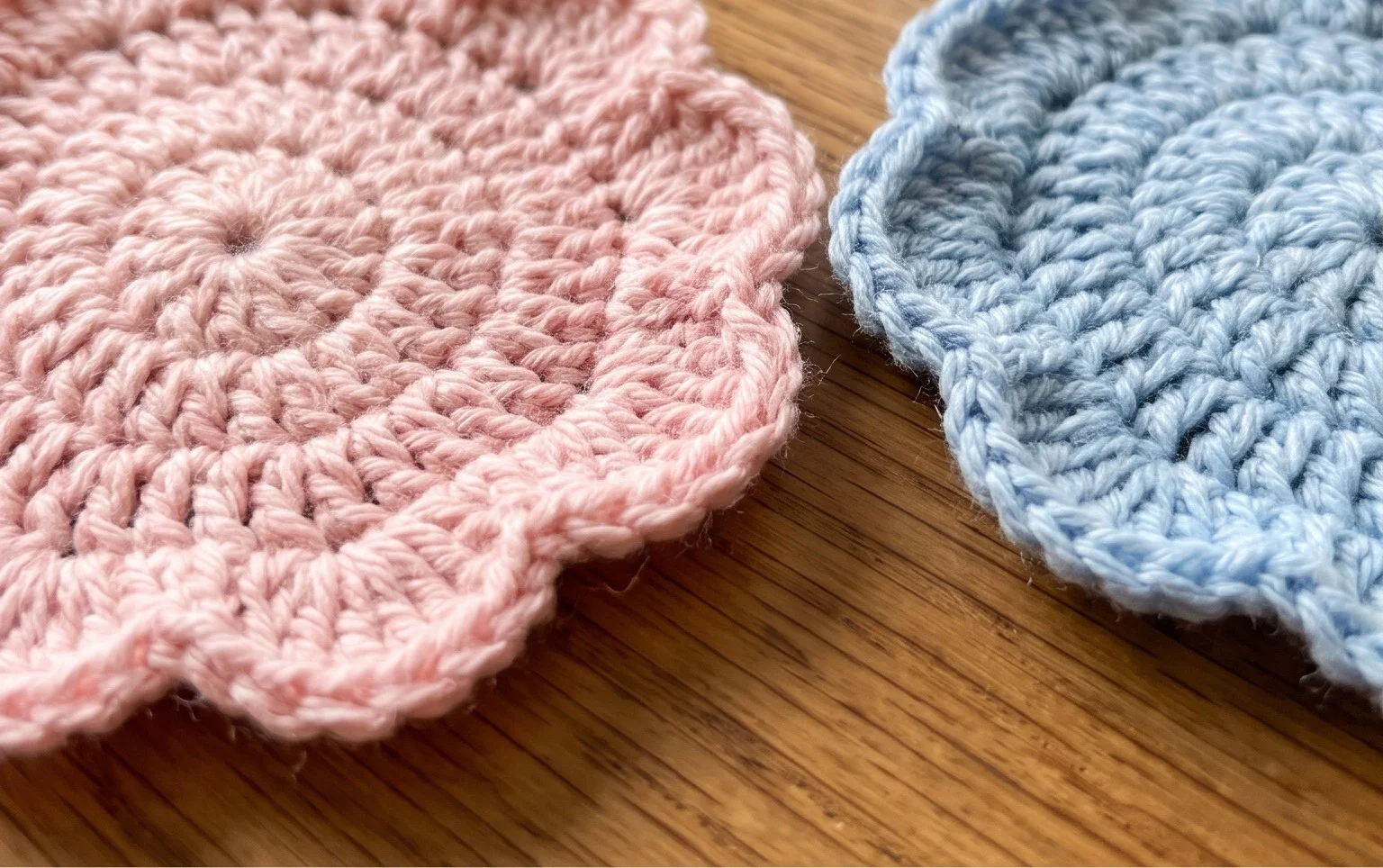
A finished set of cotton flower coasters brings a soft, handmade touch to a coffee table, and the raised petal edges make each one easy to spot beneath a cup. For a simple variation, use two shades of cotton, one for the center and another for the petals, while keeping the yarn weight consistent so the pieces stay close in size. Let the coasters dry flat after washing to help their shape settle. If you make a set, share a photo on Pinterest or your favorite social platform; seeing the colors you choose can give other makers ideas. Then browse the blog for more free crochet patterns, including small projects that use leftover yarn.