Easy Crochet Circle Mandala Vest Free Pattern Guide
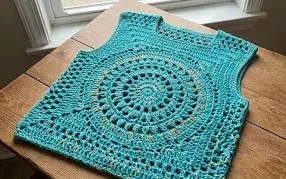
A round mandala motif gives this crochet vest its standout shape, with open stitches that let the fabric fall softly over a shirt or dress. The finished piece has a relaxed, bohemian feel, and a change of yarn color can bring out the circular design without adding extra details. It suits crocheters ready to try a larger wearable project, as well as gift makers who enjoy choosing a color to match someone’s wardrobe. The motif is satisfying to watch grow as you work in rounds, and the vest turns that decorative circle into something you can wear. In this pattern article, you’ll learn about the materials, the stitches used to build the mandala, and how the circular fabric is shaped into a vest. Take your time with stitch counts so the motif lies flat and drapes comfortably.
Why You’ll Love This Pattern
A firm cotton dishcloth is useful at the sink, easy to wash, and small enough to finish in an evening. This beginner-friendly pattern uses single crochet stitches and a simple two-row texture repeat, so you can practise keeping even edges without tracking complicated shaping. The ridges give the cloth a little more surface texture than a plain square, while the compact size makes it a practical project for leftover cotton yarn.
It also makes a useful handmade gift: pair a finished cloth with a bar of soap or a bottle of dish liquid. One crocheter’s sample review: the instructions below are clear and the ridged fabric feels sturdy without being stiff.
The two-row repeat was easy to remember, and I finished my cloth in one evening. I’m using it at the kitchen sink and plan to make another in a different cotton color.
— Maya, sample maker review
Pattern Overview & Skill Level
- Skill Level: Beginner. You need to know how to chain and single crochet.
- Approximate Time: 2–3 hours, depending on your pace and how often you stop to check your stitches.
- Construction: Crochet one flat rectangle in turned rows, alternating back-loop and full single crochet rows for ridges. No sewing or joining is needed.
- Finished Dimensions & Sizing: About 7.5 × 6.25 inches (19 × 16 cm) after washing and drying flat. Size can vary with yarn, hook, and tension.
Materials & Supplies Needed
- Yarn: About 70 yards of worsted-weight (#4) 100% cotton yarn in one color. Cotton absorbs water and tolerates frequent washing. A solid or lightly flecked yarn makes the ridged texture easy to see.
- Hook Size: 5.0 mm (H-8). Use the hook that gives you a firm but flexible fabric; a very loose cloth may stretch when wet.
- Notions: Tapestry needle for weaving in the two ends, scissors, and a ruler or tape measure. A stitch marker is optional for marking the first stitch of a row.
- Substitutions: A similar-weight cotton-linen blend can work, though it may feel less soft and may change the finished dimensions. Avoid acrylic for a cloth used to wipe up spills, since it absorbs water less readily than cotton. If you use a different yarn weight, choose an appropriate hook and expect the size, texture, and yardage to change.
- Gauge: 16 single crochet stitches and 20 rows measure about 4 inches (10 cm) in the pattern fabric. Gauge is a guide for matching the stated finished size; exact dimensions depend on your tension.
Stitch Guide & Abbreviations (US Terms)
- ch = chain.
- sc = single crochet. Insert the hook in the indicated stitch, yarn over and pull up a loop, yarn over and pull through both loops on the hook.
- BLO = back loop only. Work the stitch through the back loop of the stitch at the top of the previous row. The unused front loop forms a ridge.
- st(s) = stitch(es).
The turning chain does not count as a stitch. Work the first single crochet into the first stitch of each row, directly beside the turning chain. This keeps the side edges straight and maintains the 30-stitch count.
Step-by-Step Pattern Instructions
Dishcloth
- Foundation: Ch 31. This makes a starting chain for 30 single crochet stitches.
- Row 1: Sc in the second ch from the hook and in each ch across. Turn. (30 sts)
- Row 2: Ch 1, sc in BLO across. Turn. (30 sts)
- Row 3: Ch 1, sc in both loops across. Turn. (30 sts)
- Rows 4–29: Repeat Rows 2–3 thirteen times, ending with a Row 3 repeat. Each row has 30 sts.
- Row 30: Ch 1, sc in both loops across. Fasten off, leaving a tail long enough to weave in. (30 sts)
Rows 2–29 form 14 pairs of alternating rows: 14 back-loop-only rows and 14 full single crochet rows. Row 30 adds a final full single crochet row, for 30 rows total. Keep the turning chain loose enough to turn comfortably, but do not count it as a stitch or work into it.
Finishing
Thread the yarn tail onto a tapestry needle. Weave it through several stitches on the wrong side, change direction, and weave through a few more stitches to help secure it. Repeat with the starting tail. Trim the ends close to the fabric without cutting the stitches. If the cloth curls slightly, wash it and lay it flat to dry, smoothing the edges into a rectangle.
Care & Washing Instructions
- Wash cotton cloths in warm water with regular laundry detergent; follow the yarn label if it gives a lower temperature.
- Dry flat when possible, or tumble dry on low if the yarn label permits it.
- Reshape the damp cloth by hand and smooth the edges flat; cotton usually needs little or no formal blocking.
Pro Tips & Common Mistakes to Avoid
- Keep your tension even, especially along the starting chain. If the chain feels tight, make it with a hook one size larger, then switch to the 5.0 mm hook for Row 1.
- Count the stitches at the end of each row. Place an optional marker in the first stitch if it is easy to mistake that stitch for the turning chain.
- Weave in the ends on the wrong side, passing the needle through the cotton stitches in more than one direction. A short tail that is simply knotted can work loose with repeated washing.
- For a wider cloth, add chains to the foundation and work one fewer single crochet than the number of chains. Every added stitch widens the cloth by roughly ¼ inch at the stated gauge and uses more yarn; extra rows make it longer.
Frequently Asked Questions
Can I use a different cotton yarn?
Yes. Choose another worsted-weight cotton and check its label for a suitable hook range. A thinner or thicker yarn changes the finished dimensions and may make the fabric more open or dense, so make a small gauge sample if matching the stated size matters.
How can I make the dishcloth smaller or larger?
For a narrower cloth, begin with fewer chains while keeping one fewer single crochet than the chain count. For more length, add rows in complete pairs so the alternating texture stays balanced. Changes to either dimension affect how much yarn you need.
Is this pattern suitable for a first crochet project?
Yes, if you are comfortable making chains and single crochet stitches. The main points to watch are working into the correct loops on Row 2 and keeping 30 stitches in every row. A stitch marker can help identify the first stitch.
May I sell dishcloths made from this pattern?
Check the designer’s terms before selling finished items made from a pattern. If you sell your work, describe the materials accurately and follow any rules that apply to your location and sales platform.
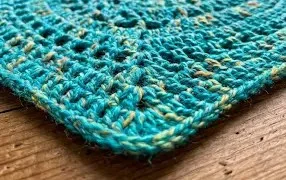
Once the final round is finished, the mandala vest brings a handmade touch to a simple outfit, with its circular pattern visible from every angle. Try the design in one solid shade for a calm look, or choose a soft color change yarn to let the rounds shift gradually. Before wearing or gifting it, check that the circle lies flat and gently block the fabric if the edges need a little help settling. Share a photo of your finished vest on Pinterest or your favorite social platform; seeing how different yarns change the drape is part of the fun. When you’re ready for another project, explore more free crochet patterns on the blog, from small weekend makes to wearable pieces.