Easy Crochet Mitten Christmas Ornament Free Pattern
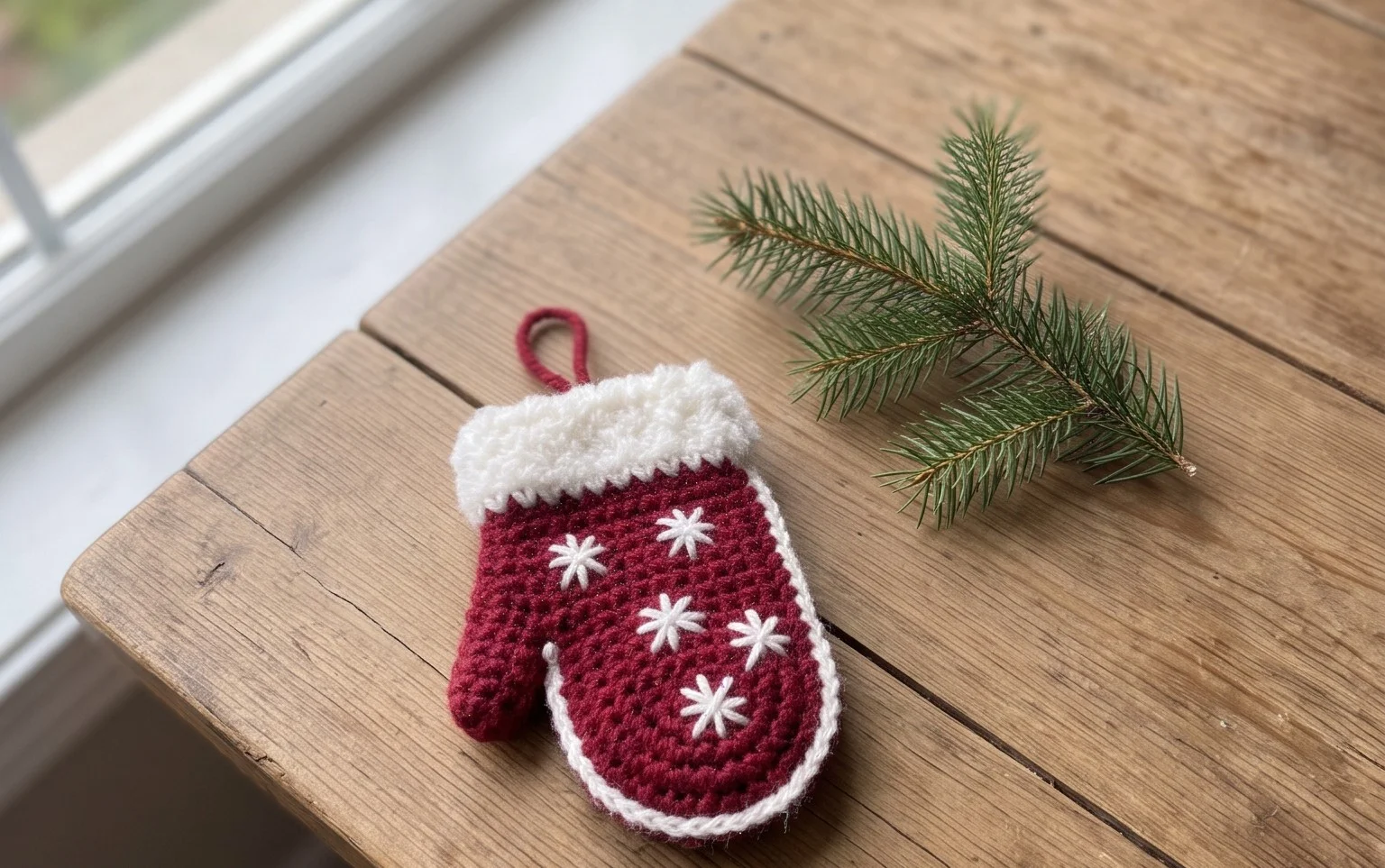
A pair of tiny crocheted mittens brings a soft handmade touch to a Christmas tree, mantel, or wrapped gift. Their small scale makes them satisfying to finish in an evening, while the rounded mitten shape and textured stitches give them a cozy look. This project suits beginners who are ready to practice consistent stitches, as well as gift makers and anyone who likes adding handmade details to holiday decor. You can use a small amount of yarn, so leftover colors from other projects have a place here. The pattern introduces the simple shaping that turns a flat crochet piece into a mitten-shaped ornament, with stitch counting and neat edges helping the shape stay even. You will also learn how a hanging loop finishes the ornament for the tree. Make a matching pair, or work one at a time for small handmade gifts.
Why You’ll Love This Pattern
A firm cotton dishcloth is useful at the sink, and its simple rows make this a comfortable project to pick up between other tasks. This pattern uses single crochet throughout, so you can focus on keeping the edges straight rather than learning a complicated stitch sequence. The finished cloth measures about 8 inches square, a handy size for washing dishes or wiping counters.
One ball of worsted cotton is usually enough, and the fabric is easy to wash and reuse. The pattern also works well for a first project because every row has the same stitch count. A crocheter who made a sample cloth said:
The rows were easy to count, and the cotton made a sturdy cloth that washed well after use.
— Mia, sample-maker
Pattern Overview & Skill Level
- Skill Level: Beginner. You need to know how to chain and make single crochet stitches.
- Approximate Time: About 2 to 3 hours, depending on your pace and how often you stop to check your row count.
- Construction: Work a flat rectangle in back-and-forth rows, turning at the end of each row. The cloth has no seams or separate pieces.
- Finished Dimensions & Sizing: About 8 inches wide by 8 inches tall, or 20 by 20 cm, using the stated yarn and hook. Small differences in tension are normal.
Materials & Supplies Needed
- Yarn: About 100 yards of worsted-weight cotton yarn, weight category #4. A solid or lightly variegated color makes it easier to see your stitches. Cotton absorbs water and holds up well to frequent washing.
- Hook Size: 4.5 mm / 7. Use this as a starting point; if your fabric feels stiff, try a 5.0 mm / H-8 hook.
- Notions: Tapestry needle for weaving in the starting and finishing tails, scissors, and a ruler or tape measure. A removable stitch marker can help mark the first stitch of a row.
- Substitutions: A similar-weight cotton or cotton-blend yarn is the safest substitute. A thinner yarn makes a smaller, lighter cloth; a thicker yarn makes a larger, heavier cloth and may need a larger hook. Acrylic is less absorbent than cotton and can feel warmer against the hands.
For a close match to the listed size, crochet a small sample before starting. Your gauge should be about 15 single crochet stitches and 16 rows in 4 inches (10 cm). Gauge can vary with the yarn and your personal tension, so the finished measurements matter more than matching the sample exactly.
Stitch Guide & Abbreviations (US Terms)
- ch: Chain. Yarn over and pull through the loop on your hook.
- sc: Single crochet. Insert the hook in the stitch, yarn over and pull up a loop, yarn over again and pull through both loops.
- st: Stitch.
- sts: Stitches.
- rep: Repeat.
The turning chain at the start of each row does not count as a stitch. Work the first single crochet into the first stitch of the row, directly beside the turning chain. This keeps the row edges straight and maintains a count of 30 stitches.
Step-by-Step Pattern Instructions
Dishcloth
- Foundation: Ch 31. The chain itself does not count as a row.
- Row 1: Sc in the second ch from the hook and in each ch across. Turn. (30 sts)
- Row 2: Ch 1, sc in each st across. Turn. (30 sts)
- Rows 3–30: Rep Row 2. At the end of each row, check that you have 30 sc before turning. (30 sts each row)
Finishing
After Row 30, cut the yarn, leaving a tail of about 6 inches. Pull the tail through the final loop to secure it. Thread the tail onto a tapestry needle and weave it through several stitches on the wrong side of the cloth. Weave in the foundation tail the same way. Avoid pulling either tail tightly, which can pucker the edge. Lay the cloth flat and check that it is close to square before using it.
Care & Washing Instructions
- Wash cotton in warm water, up to 40°C (104°F), with similar colors and a regular mild detergent.
- Tumble dry on low or dry the cloth flat; follow the yarn label if it gives different instructions.
- Reshape the damp cloth by hand and smooth the edges flat. Cotton usually does not need formal blocking.
Pro Tips & Common Mistakes to Avoid
- Keep an even tension: If your turning chain is tight, the sides may pull inward. Make it about the same height as a single crochet, and avoid tugging the working yarn after turning.
- Count the stitches: Place a marker in the first stitch of each row if the edges are hard to see. Count 30 stitches before you turn; missing the first or last stitch can gradually narrow the cloth.
- Hide the tails securely: Weave each end through several stitches in one direction, then change direction for a short section. This helps the ends stay put through repeated washing.
- Adjust size with the starting chain: Add or remove chains to change the width, then work enough rows to reach your preferred height. More stitches and rows use more yarn, so allow extra yardage for a larger cloth.
Frequently Asked Questions
Can I use a different yarn fiber?
Yes. Cotton is recommended because it is absorbent and handles regular washing. A cotton blend can also work. Wool may shrink or felt, while acrylic is generally less absorbent, so check the yarn label and expect a different feel and possibly a different finished size.
How can I make the dishcloth larger or smaller?
Change the foundation chain to adjust the width, then add or reduce rows to adjust the height. Keep the same single crochet stitch and make sure the number of stitches stays consistent across every row. A larger cloth requires more yarn.
Is this pattern suitable for a first crochet project?
Yes. It uses only chains and single crochet stitches, and the same row is repeated throughout. Count each row as you go, especially the first few, so you can correct an accidental missed stitch before the edges begin to taper.
Can I sell dishcloths made from this pattern?
Check the designer’s terms before selling finished items, and follow any restrictions they provide. If you sell your work, describe the materials accurately and do not claim authorship of the pattern.
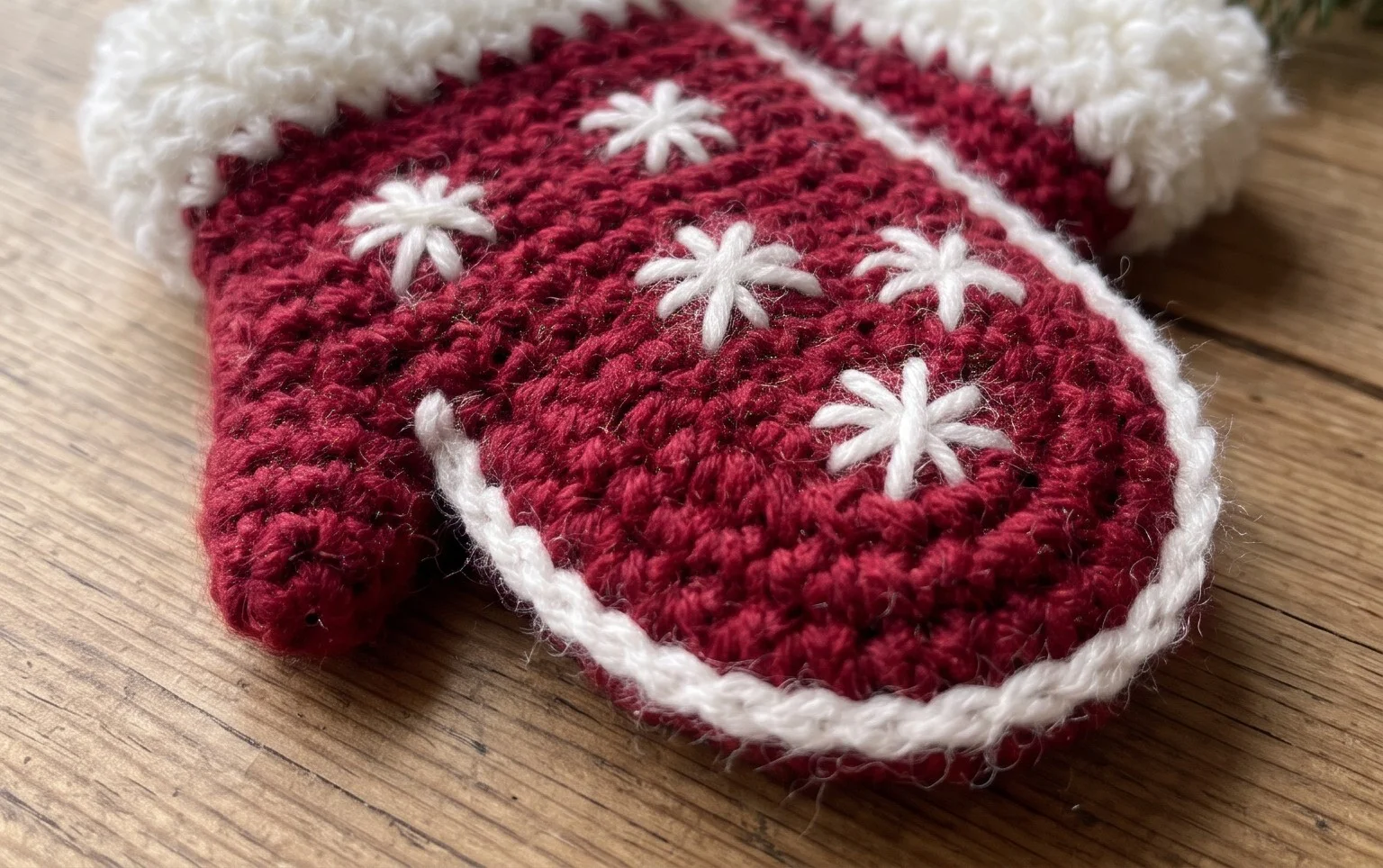
Finishing a tiny mitten ornament is a pleasing way to turn a little yarn into something you can bring out each December. The shaped silhouette and hanging loop give it a finished look on a tree branch, and a pair can make a sweet handmade addition to a gift. For a simple variation, crochet the mittens in one bright red yarn instead of a neutral shade. If you make this pattern, share a photo on Pinterest or your favorite social media account so other crocheters can see your colors and finished details. Then browse the blog for more free crochet patterns, including small projects that use leftover yarn and fit into a relaxed evening of making.